For the stages of the Great Himalaya Trail (10–15 km per day, ~600 m ascent, 6-8 hours of walking, ~8 kg backpack), nutrition should be planned around steady energy supply rather than large individual meals. During continuous uphill movement the body relies primarily on carbohydrates, which are burned quickly and must be replaced throughout the day to avoid sudden fatigue. After hiking, recovery becomes the priority: larger meals should provide carbohydrates to refill muscle glycogen, enough protein to support muscle repair, and especially fats to supply longer-lasting energy overnight. Hydration and sodium intake are equally important, since several hours of daily exertion lead to substantial fluid and electrolyte losses even in cool mountain conditions.
With this activity level, daily energy expenditure is significantly above normal baseline needs. A man weighing about 85 kg will typically require roughly 2,800–3,500 kcal per day, while a woman weighing about 55 kg will need approximately 2,200–2,800 kcal per day. These values already include the hiking load and elevation gain, and they explain why relying only on one evening meal is insufficient; energy must be consumed gradually during the day and complemented with a substantial recovery meal in the evening.
The body has two distinct energy demands during a multi-day trek, and nutrition works best when it addresses both separately rather than treating food as a single daily requirement.
| Situation | What the body needs |
|---|---|
| During walking | quickly available carbohydrates |
| Evening / recovery | fat, a substantial meal, and salt |
During movement, the muscles depend primarily on easily accessible carbohydrates. These provide immediate fuel for continuous effort and help maintain stable blood glucose levels, which supports concentration, coordination, and steady pacing. Because digestion is reduced while hiking, small, frequent carbohydrate intake works far better than occasional large meals.
After the hike, the goal changes from performance to recovery. The body must refill depleted glycogen stores, repair muscle tissue, and restore fluid and electrolyte balance. A larger meal containing carbohydrates helps replenish energy reserves, while fats provide longer-lasting overnight energy and reduce early-morning fatigue. Salt assists rehydration and replaces sodium lost through sweat.
For this reason, an effective trekking nutrition strategy combines different types of food with specific purposes:
- Carbohydrate Power Iso-drink – continuous fuel while walking
- Snacks – steady energy between pauses
- Warm evening meal – recovery, replenishment, and preparation for the next day
Breakfast
A typical trekking breakfast should be light rather than large. After a night without food the body is sensitive to carbohydrate intake, and a big, carb-heavy breakfast (for example bread, sugar, or large portions of porridge) can cause a strong insulin response. This often leads to a drop in blood glucose 1–2 hours later, exactly when the day’s first climb begins, resulting in early fatigue and low energy. A smaller breakfast works better: something easy to digest, followed by gradual fueling once walking starts. Scrambled eggs are a good option because protein and fat produce a much smaller insulin spike, keep you satiated longer, and provide steady energy until the body settles into a stable rhythm during the first part of the hike.
A good example with ~300-500Kcal looks like:
| Component | kcal |
|---|---|
| 2 eggs | ~150–170 kcal |
| some bread | ~120–180 kcal |
| small cheese or nuts | ~80–150 kcal |
A common offer for breakfast in Nepal is Tibetan Bread. Nutritionally it's basically a fried flatbread (wheat dough cooked in oil or butter). That means:
- high carbohydrates (flour)
- moderate fat (from frying)
- very little protein
- quite energy dense (~300–400 kcal per piece depending on size and oil)
It’s not ideal as the main breakfast before starting to walk uphill. In the morning your body is still in a fasting state and insulin-sensitive. A large portion of refined carbohydrates right before hiking causes blood sugar rise with a strong insulin response and then a drop in blood glucose 60–120 minutes later. And that drop typically happens exactly during the first ascent of the day → heavy legs, early fatigue, and sudden hunger.
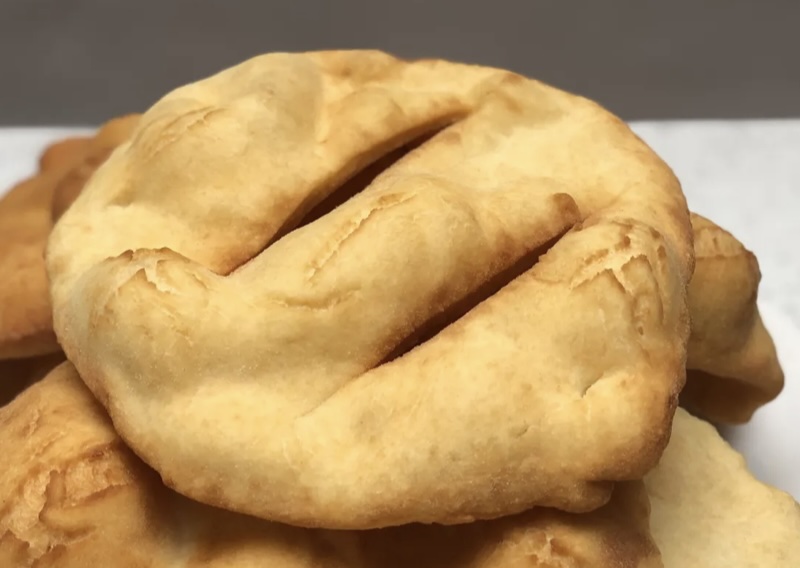
Tibetan bread is actually excellent during the hike, especially mid-morning break, at lunch or as an afternoon energy dip. At that point your muscles are already working and immediately use the carbohydrates, so you avoid the insulin crash. The added frying fat even helps slow absorption slightly and gives steadier energy than plain bread. So you’ll get the calories without the early energy crash.
Lunch soup
A simple soup at midday can be surprisingly effective on a trek. Warm broth is easy to digest, restores fluids, and provides sodium, which improves hydration and helps prevent headaches and fatigue. Unlike heavy lunches, it does not burden the stomach before continuing uphill, yet it stimulates appetite so that snacks are easier to eat afterwards. Instant vegetable or noodle soups are lightweight to carry, quick to prepare, and psychologically refreshing, especially in cold or wet conditions, making them a useful complement to snacks and carbohydrate drinks rather than a replacement for them.
Example: instant vegetable or noodle soup prepared with ~400–500 ml water is about ~100–250 kcal:
| Soup type | kcal |
|---|---|
| clear vegetable broth | ~40–80 kcal |
| noodle soup | ~120–200 kcal |
| soup + small crackers | ~200–300 kcal |
On-trail Carbohydrate Powder (Iso-Drink)
Nutritional values
- ~380–400 kcal / 100 g
- ~100 g carbohydrates
- no fat, no protein
The iso-drink does not replace a meal. It serves as continuous energy during walking. Without an iso-drink, what often happens is an energy crash after about 4–5 hours (“bonking” / hitting the wall). With an iso-drink, you have steady performance and greater daily distance
Target intake per hour (Do not drink it all at once — take small sips every 5–10 minutes.)
| Person | Carbohydrates per hour |
|---|---|
| Man (85 kg) | 40–60 g/h |
| Woman (55 kg) | 30–50 g/h |
Daily requirement of carbohydrate powder (assuming ~6 hours of walking)
| Person | Powder / day | kcal from it |
|---|---|---|
| Man | 200–300 g | ~800–1200 kcal |
| Woman | 150–250 g | ~600–1000 kcal |
Use a Mixing ratio of 60–80 g powder per 1 liter of water and drink gradually throughout the hiking day. Best is to have a flask with the iso-drink always in reach e.g. on your chest straps of the backpack.
During prolonged hiking the body loses not only water but primarily sodium through sweat which is roughly 800–1200 mg sodium per liter of sweat. If you drink only water and carbohydrates, the blood becomes diluted and electrolyte balance drops. Typical effects are:
- headaches
- heavy or weak legs
- nausea
- sudden fatigue or performance collapse
The recommended amount per liter of drink is ~1.5 g table salt (= about 600 mg sodium). Regular table salt is fully sufficient and often more effective than electrolyte tablets, which frequently contain too little sodium for several hours of continuous hiking.
On-trail snacks
In addition to the carbohydrate drink, small solid snacks provide steady background energy and help prevent hunger and mood drops between breaks. Suitable options include peanut butter, nuts, chocolate, and simple energy bars. These foods are compact, calorie-dense, and easy to eat in small portions while walking. Nuts and peanut butter contribute fats for longer-lasting energy and some protein, while chocolate and bars offer quick carbohydrates for short-term fuel. Rather than eating large amounts at once, it works best to take a few bites every 60–90 minutes throughout the day.
Hard cheese, salami, and crackers are excellent on-trail snacks, especially after several days when sweet foods become less appealing. They provide fat and protein for longer-lasting energy and help maintain muscle recovery, while the salt supports electrolyte balance and hydration. Because they are calorie-dense, stable without refrigeration, and easy to portion, they work well during short breaks or as a small lunch. Including at least one savory option each day also helps appetite, making it easier to keep eating regularly during a multi-day trek.
Arriving at the camp
After several hours of hiking your muscles are low on glycogen (their stored carbohydrate). When you stop walking, blood flow returns to the digestive system and the muscle cells become especially sensitive to incoming nutrients. For roughly the first 30–60 minutes after finishing, the body takes up carbohydrates very efficiently and starts repairing muscle tissue. In sports physiology this is sometimes called the recovery window. It’s not that food stops working later — but eating early noticeably improves recovery and next-day performance.
You don’t need a full meal immediately — you need a small recovery snack within ~10–20 minutes after arriving at the camp. Aim for quick carbohydrates, a little protein, some salt and fluids
Good examples are:
- a handful of nuts + chocolate
- crackers with cheese or salami
- peanut butter on bread or tortilla
- a mug of soup or broth
- leftover Tibetan bread with something salt
- a sweet tea or iso drink
Rough target:
→ about 200–400 kcal and a drink
This alone already starts glycogen refill and prevents the “I’m freezing and exhausted” feeling at camp.
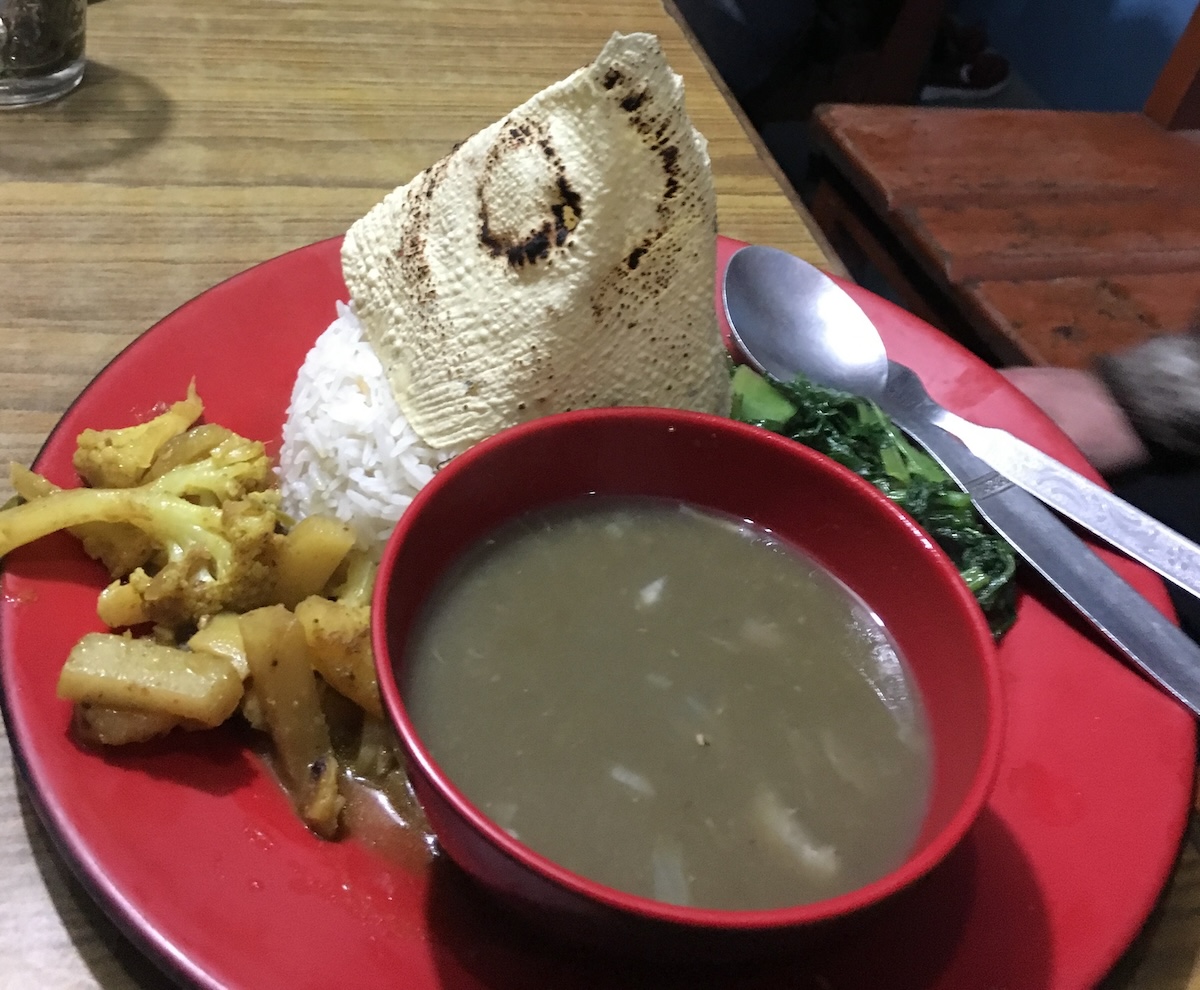
Evening meal: Dal Bhat
Our main evening meal will be Dal Bhat (rice with lentil soup, usually served with vegetables and sometimes potatoes). It works very well after a full day of hiking. A typical large portion provides roughly 700–1100 kcal and is easy to digest even after long exertion.
What it covers well
- Carbohydrates: Rice efficiently refills depleted muscle glycogen stores and prepares the body for the next day’s walking.
- Electrolytes (especially sodium): The dish is usually fairly salty, helping replace sweat losses and improving rehydration.
- Micronutrients & fiber: Lentils and vegetables supply minerals such as potassium, iron, and magnesium, and support digestion after a day of snack-based eating.
- Moderate protein: Lentils contribute some protein that assists recovery.
Where supplementation is needed
- Fat: Dal Bhat is relatively low in fat, yet fat is important for overnight energy and warmth. Add calorie-dense foods such as nuts, peanut butter, cheese, or salami after dinner.
- Additional protein: The lentils alone are usually insufficient for several consecutive hiking days. Supplement with cheese, cured meats, or nuts to support muscle repair.
- Total daily calories: Even a large portion does not cover the full daily energy expenditure, so calories must still come from daytime intake (carbohydrate drink and snacks).
In practice, Dal Bhat functions as an excellent recovery meal and electrolyte source, but it works best when complemented by energy intake during the day and additional fat- and protein-rich snacks in the evening.
Olive oil is one of the most weight-efficient calorie sources you can carry: about 884 kcal per 100 ml. Because it contains almost pure fat, even a small amount significantly increases the energy content of a meal without increasing volume or cooking time. Adding one or two tablespoons to the evening meal (for example into rice, lentils, or vegetables) helps meet daily calorie needs, provides long-lasting overnight energy, and reduces early-morning fatigue. A small leak-proof bottle can supply several days of additional calories at minimal pack weight.
Small comfort items
A few very lightweight “luxury” items can have a surprisingly large impact on morale during a multi-day trek. Things like tea, instant coffee, broth powder, or a small spice (such as paprika or chili) weigh almost nothing but greatly improve both appetite and motivation, especially in cold or wet conditions. A warm drink or a better-tasting meal often helps more than carrying several hundred extra calories, because maintaining morale makes it easier to keep eating regularly and recover properly each day.
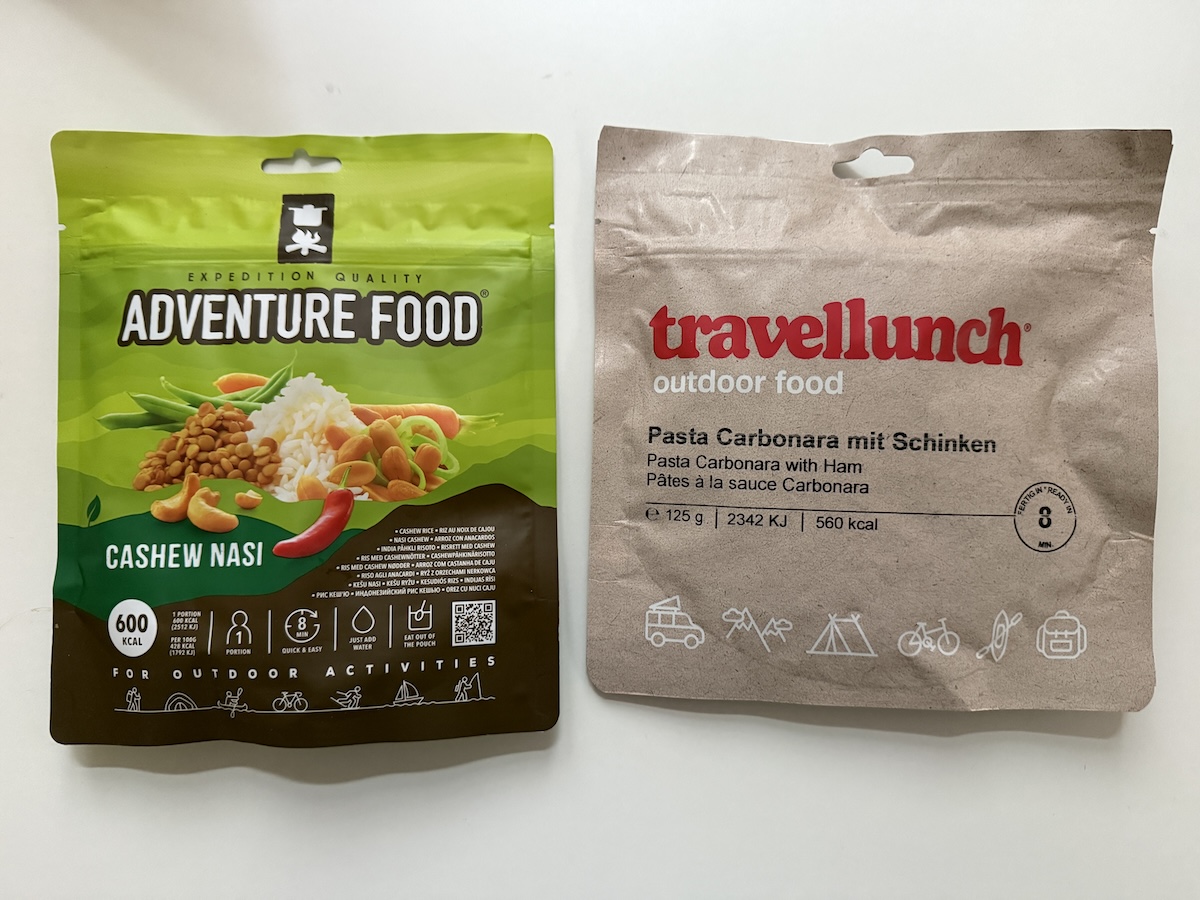
Bringing some portions of dried trekking meals that tase different to Nepali food and simple desserts (for example chocolate, pudding powder, or sweets) can also help psychologically, giving you something to look forward to at the end of a long day. The typical Trek’n Eat meal dry weight is ~120–180 g dry weight per pouch and after adding hot water → ~500–700 g prepared food. High-fat meals like pasta carbonara or creamy rice are at the top, lighter rice/vegetable dishes lower:
| Portion | kcal |
|---|---|
| per 100 g (dry) | ~430–520 kcal |
| per full pouch | ~600–900 kcal |